China Top Faux Wood Wall Panels Suppliers for Buyers
Faux Wood Wall Panels can bring the warmth of timber to a project without relying on solid wood. For buyers sourcing from China, choosing a supplier involves more than comparing catalog photos and unit prices. This guide looks at how to assess manufacturers through product range, production capability, communication, sample quality, and documented specifications. Panel composition varies, so confirm the core material, surface coating, thickness, edge treatment, and intended installation environment. Details matter. A sample under warm showroom lights may look different beside a window or under cool office lighting. Request written information on moisture resistance, cleaning, dimensional tolerance, and relevant performance testing for the intended use. Check claims against current documents rather than relying on a product page alone.
Reliable comparisons also consider minimum order quantities, lead times, packaging, customization limits, replacement policies, and how defects are handled. Ask for recent project references where available, and verify that quoted specifications match the sample and final order. Trade-offs are real. A lower price may bring longer lead times or fewer finish options; a polished brochure does not prove consistent production. Buyers should clarify who coordinates freight and what inspection steps occur before dispatch. These checks cannot remove every risk, but they make decisions less dependent on promises. This overview introduces notable China-based Faux Wood Wall Panels suppliers and practical questions buyers can use to compare them with care.
Understanding Faux Wood Wall Panels and Their Common Applications
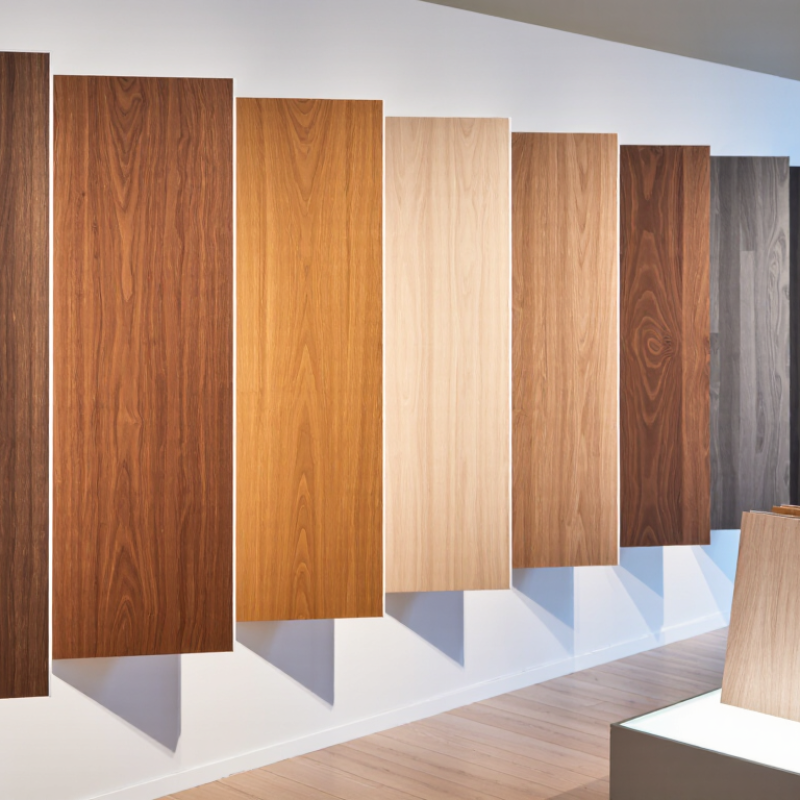
Faux wood wall panels recreate the grain and warmth of timber without using solid boards. They may be made from PVC, polyurethane, or composite materials, with printed or molded surface textures. Some feel smooth; others have grooves that catch light and create visible shadow lines. They are not solid timber. Buyers should check the panel’s core, surface finish, dimensions, and installation method before choosing a style.
These panels are commonly used for living-room feature walls, bedroom headboards, reception areas, and retail interiors. Lightweight options can be easier to handle on upper floors or during renovations. In a narrow hallway, vertical grooves may make the wall feel taller, while wide horizontal patterns can emphasize its length. Small details matter. Color samples should be viewed in the actual room, since warm lighting can make a gray-brown finish look much more golden.
Moisture resistance varies by product, so a decorative panel suitable for a dry lounge may not be appropriate beside a shower. Check the manufacturer’s care instructions and any relevant fire-performance information for the intended setting. Installation also affects the result: uneven walls can reveal gaps, and poorly aligned joints interrupt the wood pattern. I have found that buyers sometimes focus heavily on appearance and leave these practical checks too late. That can mean extra cutting, replacement panels, or a finish that feels different from the sample.
Types of Faux Wood Wall Panel Suppliers in China
China’s faux wood wall panel suppliers generally fall into three groups. Factory-direct manufacturers control extrusion, lamination, or molding, and suit buyers seeking repeat orders and custom dimensions. Ask for the panel’s core material, surface-film thickness, and production tolerance. Small details matter. A warm walnut finish can look different under warehouse lighting.
OEM and ODM suppliers adapt colors, profiles, packaging, or branding; their capabilities vary, so request a physical sample before approving a full run. Trading companies often consolidate products from several factories, which can simplify mixed orders but make factory-level traceability harder. Integrated project suppliers may also provide measurement guidance and installation accessories. Check whether those services are performed in-house or subcontracted.
Grand View Research’s Wood Plastic Composite Market report estimated the global market at USD 7.1 billion in 2023 and projected an 11.4% compound annual growth rate from 2024 to 2030. This is a broad materials-market estimate, not a forecast for faux wood wall panels alone. Buyers should compare test reports, fire-performance documentation, moisture behavior, and batch consistency. One weakness in many supplier listings is vague terminology: “waterproof” rarely explains the test conditions. Ask for the method and results.
China Faux Wood Wall Panel Supplier Types
Typical roles across five supplier types. A value of 1 indicates a role commonly performed; 0 indicates it is not a typical core role. This is a role comparison, not market-share or supplier-count data. Actual services vary by supplier.
How to Evaluate Supplier Quality and Manufacturing Capabilities
For China top faux wood wall panels suppliers, evaluate the factory, not just the sample board. Ask for the panel’s core composition, production tolerances, and batch-specific test reports. Then compare a fresh sample with a production sample: check edge finish, thickness, color consistency, and whether the surface scratches under light pressure. Small details matter. Request the inspection checklist and records for rejected units, too. A polished showroom tells you little about routine quality control.
Check performance claims against recognized test documents. The U.S. EPA’s TSCA Title VI limits formaldehyde emissions from regulated composite-wood cores to 0.05 ppm for hardwood plywood, 0.09 ppm for particleboard, and 0.11 ppm for MDF; thin MDF has a 0.13 ppm limit. These figures apply when the panel contains covered materials, so confirm the actual substrate and test scope.
For fire performance, ask whether the report covers the finished panel system, not merely its raw core. ASTM E84 Class A benchmarks include a flame-spread index of 0–25 and a smoke-developed index of 450 or less. Verify the report issuer, test date, and product code. A certificate can look convincing and still describe a different construction.
I would also ask how the factory controls color changes between batches; this point is easy to overlook, even by experienced buyers.
Verifying Certifications, Samples, and Export Readiness
When comparing faux wood wall panel suppliers in China, do not rely on a certificate image alone. Ask for the document number, issuing body, validity dates, and product scope. Confirm that the certificate covers the panel type you plan to buy, not merely a different product from the same factory. Requirements vary by destination market, so check them with your importer or a qualified compliance adviser. Paperwork can look convincing. Details matter.
Request samples from the intended production line and finish. Check color consistency in daylight and under warm indoor lighting. Inspect the edges, surface texture, backing, and locking or fixing details. A small sample cannot show how panels behave across a full wall, but it can reveal obvious defects. Keep one approved sample as a reference. Even then, finishes may vary slightly between batches; agree on acceptable tolerances in writing.
Export readiness involves more than quoting a shipping price. Ask who prepares packing lists, commercial invoices, and product specifications, and confirm that carton labels match the order. For a trial shipment, clarify packaging dimensions, pallet requirements, lead time, and how damage claims are documented. Request recent packing photos if a factory visit is not practical. I would still avoid assuming that clear emails guarantee smooth execution. A small test order can expose gaps before a larger commitment.
Comparing Quotes, Delivery Terms, and After-Sales Support
China Top Faux Wood Wall Panels Suppliers for Buyers
When comparing quotes, make sure each supplier prices the same panel size, thickness, surface finish, and order quantity. A low price may exclude corner trims, protective film, or export packing. Ask for a sample that shows the color and texture under ordinary room lighting. Photos can make grain look deeper than it is.
Check delivery terms alongside the quoted price. Confirm production time, packing method, shipping arrangement, and who handles costs at each stage. Ask whether the supplier can share recent packing photos and provide tracking after dispatch. A promised delivery date is useful, but it is not a guarantee. Leave room for delays, especially when panels need custom colors or dimensions.
After-sales support can matter once cartons arrive. Agree in writing how damage, shortages, or mismatched panels should be reported, and what evidence is required. Get it in writing. A responsive contact is valuable, but response speed alone does not resolve a claim. Clarify whether replacement panels, spare pieces, or installation guidance are available, and who pays related shipping costs. Some details may feel tedious before purchase. They are easier to settle before the panels are on site.

