What is the Cost of Readymix Concrete in Your Area?
Understanding the cost of readymix concrete is essential for construction projects. In recent industry reports, prices can vary significantly depending on location and market demand. For instance, a 2022 survey indicated that the average readymix concrete cost ranged from $110 to $150 per cubic yard. Factors influencing these costs include transportation, production methods, and concrete grade.
In urban areas, demand often drives up prices. A notable example is the Northeast U.S., where costs can exceed $175 per cubic yard. Meanwhile, rural areas may see lower prices due to reduced logistical expenses. However, while lower rates are tempting, quality should not be compromised.
It's crucial to consider that prices can fluctuate unexpectedly due to economic conditions. Recent trends show that raw material costs are rising, which could further impact readymix concrete cost. Construction managers must conduct thorough research and plan budgets accordingly. Balancing quality and cost is a challenge many face in this industry. Understanding these dynamics will help ensure a successful project outcome.
Understanding Readymix Concrete: Definition and Benefits
Readymix concrete is a pre-mixed combination of cement, aggregates, and water. It is delivered to construction sites ready to use. This method holds numerous benefits for modern construction projects. For instance, it ensures consistent quality due to controlled factory conditions. The National Ready Mixed Concrete Association (NRMCA) highlights that using readymix can enhance project efficiency by reducing labor costs on-site by up to 30%.
Additionally, readymix concrete can be customized according to specific project needs. It allows architects and engineers to create customized mixes for enhanced durability or aesthetic appeal. However, it's essential to recognize that transport distance can impact cost efficiency. A report by Research and Markets shows that logistics can inflate expenses. Therefore, proper planning is crucial. It's not uncommon for companies to overlook this aspect. In some cases, costs can rise unexpectedly due to transportation delays or fluctuating fuel prices.
While readymix offers significant advantages, there are challenges too. For instance, issues related to setting times can arise if not carefully managed. Certain environmental factors, such as temperature, can affect the curing process. Depending on the area, waste management can also be a concern, as leftover concrete can lead to additional costs. Understanding these nuances is vital for a successful project. Each step should be analyzed to avoid unintended consequences in project budgets and timelines.
What is the Cost of Readymix Concrete in Your Area?
| Location |
Average Cost per Cubic Yard ($) |
Standard Delivery Fee ($) |
Common Uses |
| New York, NY |
$150 |
$75 |
Residential, Commercial |
| Los Angeles, CA |
$135 |
$60 |
Driveways, Foundations |
| Chicago, IL |
$140 |
$65 |
Patios, Sidewalks |
| Houston, TX |
$125 |
$50 |
Foundations, Slabs |
| Miami, FL |
$130 |
$55 |
Driveways, Pools |
Factors Influencing the Cost of Readymix Concrete in Your Area
When it comes to the cost of readymix concrete, several factors play a crucial role. The location is perhaps the most significant element. Urban areas often have higher costs due to increased demand and transportation fees. Rural areas might offer lower prices, but limited suppliers could affect availability. It's essential to consider these variations when planning your project.
Quality also influences pricing. Different projects require different grades of concrete. Higher-grade concrete may cost more, but it offers better durability. Local regulations may compel you to meet certain standards, which can elevate costs. Additionally, fluctuating raw material prices can shift the overall expenses unexpectedly.
Delivery fees are another aspect to keep in mind. The distance from the plant to the site significantly impacts this cost. Shorter distances generally yield more affordable rates. However, last-minute changes or urgent orders can lead to additional charges. It's prudent to communicate clearly with suppliers to avoid surprises and secure a fair deal. Factors can change quickly, so agility in planning can save money.
Cost Comparison: Readymix Concrete Prices Across Different Regions
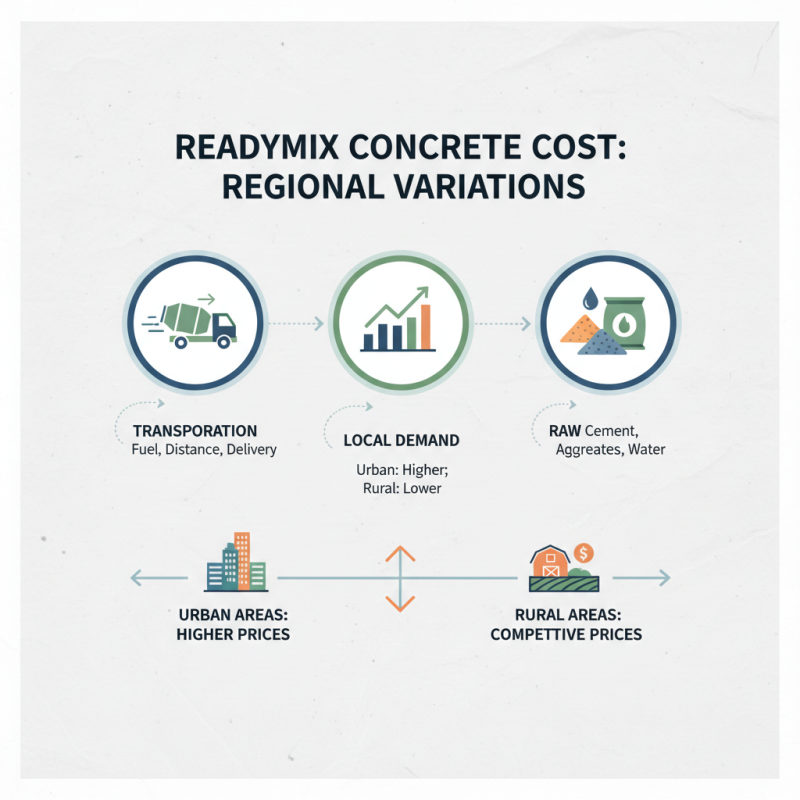
When considering the cost of readymix concrete, it varies widely across different regions. Factors influencing these prices include transportation, local demand, and raw material costs. In urban areas, prices tend to be higher due to increased delivery expenses. In contrast, rural regions may offer more competitive rates.
For buyers, it is essential to compare local suppliers. Some might quote lower prices but could have hidden fees. Always ask for a detailed breakdown of costs. A small inquiry can save you more in the long run.
Tips: Check reviews before choosing a supplier. Quality matters just as much as price. Consider ordering in bulk for potential discounts. Remember, the cheapest option may not always be the best, especially if it affects the durability of your project. Take time to reflect on your decision.
Estimating Your Project: How to Calculate Required Volume of Concrete
Estimating the required volume of concrete for your project is crucial. Start by measuring the area to be covered. Length and width measurements are essential. If you are working on a slab, multiply these two dimensions. For other shapes, use appropriate geometric formulas. Consider the thickness of concrete as well.
Tips: Always verify your measurements. Mistakes can lead to wasted materials. It’s best to double-check before ordering.
For a standard slab, a common thickness is about four inches. Convert this to feet, making calculations easier. Multiply the area by the thickness in feet. This gives you the total cubic feet needed. To convert cubic feet to cubic yards, divide by 27.
Tips: Use a calculator for accuracy. Manual calculations can lead to errors. Be mindful of unique project requirements.
When you have your volume, compare local suppliers for costs. This information helps in budgeting effectively. Understanding local market rates can save you money.
Tips for Finding Affordable Readymix Concrete Suppliers Nearby
Finding affordable readymix concrete suppliers can be challenging. Start by researching local suppliers online. Look for reviews and ratings to gauge their reputation. Utilize social media to ask for recommendations from your community. Local forums can also be useful for gathering insights.
Once you've identified a few options, compare their prices. Request quotes from multiple suppliers. This allows you to see the price range in your area. Often, prices vary significantly among suppliers. Consider the distance to each supplier. A nearby supplier may save you on transportation costs. Sometimes, a slightly higher price can mean better quality.
Don’t hesitate to negotiate. Some suppliers may offer discounts for larger orders. Additionally, be aware of any hidden fees. Ask upfront about delivery charges or special requirements. Transparency is key to avoiding unpleasant surprises.
The quality of materials is equally important. Cheap concrete may not last, leading to future costs. Choose wisely and ensure you get value for your money.