How to Use a Concrete Volume Calculator for Accurate Estimates?
In the construction industry, precise measurements are crucial. A reliable concrete volume calculator can make a significant difference. According to Dr. Michael Turner, a renowned construction engineer, “Accurate calculations prevent waste and save costs.” This highlights the importance of using tools designed for exact measurements.
Using a concrete volume calculator ensures that your project meets specifications. Accurate estimates help in ordering the right amount of concrete. Overestimating leads to unnecessary expenses, while underestimating can delay projects. Each cubic inch matters, especially in large projects.
Yet, many overlook key factors in calculations. Variations in slab thickness or mix designs can alter volume significantly. It's essential to double-check inputs. Even small mistakes can result in costly adjustments later. Utilizing a concrete volume calculator correctly enhances project efficiency and accountability.

Understanding Concrete Volume Calculators and Their Importance
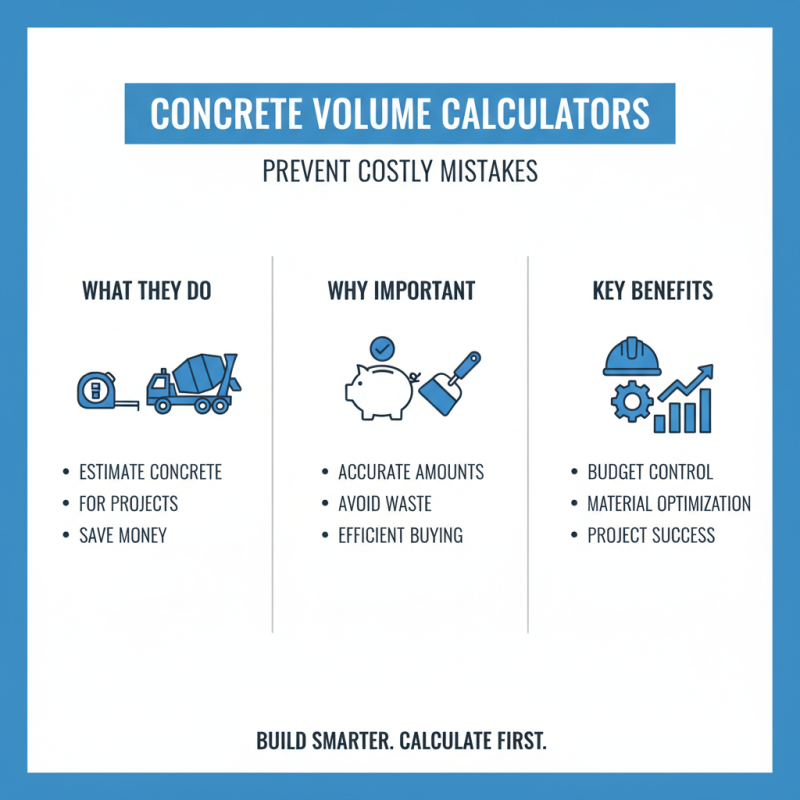
Concrete volume calculators are essential tools for anyone involved in construction or DIY projects. These calculators help estimate the amount of concrete needed for a specific job. Understanding how to use them is key to preventing costly mistakes. Accurate calculations avoid wastage, ensuring materials are bought only when necessary.
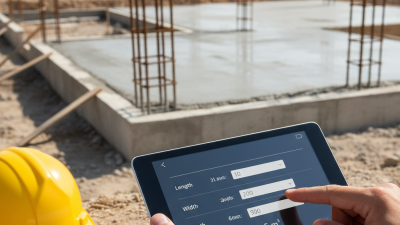
Concrete volume calculators typically require three main inputs: length, width, and depth. By multiplying these dimensions, users can derive the volume in cubic feet or meters. However, errors can emerge from incorrect measurements. Even small miscalculations can lead to significant discrepancies in material requirements. It's crucial to double-check your inputs before finalizing any estimates.
The importance of these calculators extends beyond the initial estimate. They also promote efficient project management. Knowing the exact amount of concrete needed allows for better scheduling and budgeting. While technology aids the process, users should remain vigilant. Ensure all dimensions are recorded accurately to enhance reliability in your calculations. This careful approach fosters confidence in your project outcomes.
Key Factors Affecting Concrete Volume Calculations
When calculating concrete volume, several key factors must be considered. The shape of the area to be filled impacts the formula you use. For simple areas, like rectangles, the formula is straightforward. However, irregular shapes can complicate calculations. This requires careful measurements and sometimes the use of additional geometric principles.
Another factor is the depth of the concrete layer. A thicker layer means more volume. You should measure the depth consistently. This ensures that your estimates remain accurate throughout the project. Weather conditions can also affect your calculations. For example, rainfall can impact the drying time, which may require adjustments in volume estimates.
Soil conditions beneath the concrete are crucial as well. If the ground is unstable, it may require a thicker concrete layer for support. Likewise, consider the type of concrete mix. Some mixtures are denser than others, which can further influence overall volume needs. Understanding these variables will lead to more precise calculations and a successful project outcome.
How to Use a Concrete Volume Calculator for Accurate Estimates? - Key Factors Affecting Concrete Volume Calculations
| Measurement Type |
Unit |
Example Value |
Impact on Volume Calculation |
| Length |
Feet (ft) |
50 |
Essential for determining the overall volume. |
| Width |
Feet (ft) |
30 |
Directly affects the area, thus the volume. |
| Depth/Thickness |
Feet (ft) |
0.5 |
Critical for accurate volume, especially in slabs. |
| Total Volume |
Cubic Feet (ft³) |
750 |
Final output of the calculation, needed for ordering concrete. |
| Waste Factor |
Percentage (%) |
10 |
Accounts for material loss during mixing and placing. |
Step-by-Step Guide to Using a Concrete Volume Calculator
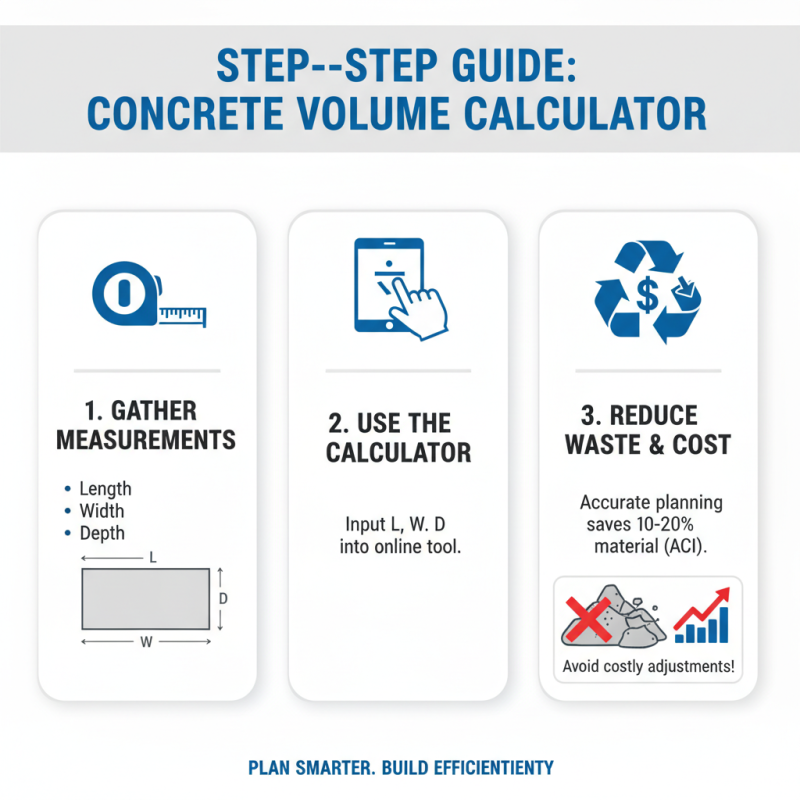
Using a concrete volume calculator can make your project planning efficient. Start by gathering the necessary measurements. Knowing the length, width, and depth of the area is crucial. According to the American Concrete Institute, accurate measurements can reduce waste by 10% to 20%. This is significant, considering that making adjustments afterward can increase costs dramatically.
Next, input these values into the calculator. Be mindful of common mistakes, such as mixing up units or not accounting for slopes. Each error can lead to inaccurate estimates. Research indicates that only 30% of DIY projects are completed on budget, often due to miscalculations. A reliable calculator can help improve this statistic.
Lastly, when you get the volume estimate, always add a margin for error. This includes considering the potential for spillage or alteration during pouring. The National Ready Mixed Concrete Association suggests adding about 10% extra to ensure you have enough material. Tracking your initial tape measurements can also help in refining your estimates and keeping your project on track.
Common Mistakes to Avoid When Calculating Concrete Volume
When calculating concrete volume, common mistakes can lead to wasted materials and increased costs. One frequent error is miscalculating the dimensions of the area. Always measure the length, width, and depth accurately. A small error can result in large discrepancies, especially in larger projects.
Another mistake involves forgetting to account for the shape of the area. If you are working with a slab, you can use a straightforward formula. However, irregular shapes require more complex calculations. Be sure to break down the area into smaller, manageable sections. This method simplifies the process and ensures accuracy.
Tips: Double-check your measurements. Use a calculator specifically designed for concrete volume to minimize human error. Additionally, consider ordering a little extra concrete to account for spillage or changes. It’s better to have some left over than to run short in the middle of a project. Remember, precision is key in achieving an effective and efficient pour.
Concrete Volume Estimation by Different Methods
Tips for Ensuring Accurate Concrete Volume Estimates
Accurate concrete volume estimates are crucial for any construction project. Begin by measuring the area where the concrete will be poured. Use a tape measure for precision. Taking multiple measurements can help catch errors. Don’t rely on one measurement alone; always double-check your figures.
When using a concrete volume calculator, input your dimensions carefully. A small error can lead to significant discrepancies. Consider the shape of the area. For irregular spaces, break it down into smaller, manageable sections. Calculate each section individually, then sum the volumes. This approach increases accuracy but requires patience and diligence.
It's easy to overlook details. Sometimes people forget to account for expansion joints or other features. Leaving out such factors can result in purchasing too little or too much concrete. If you’re unsure, consult with professionals. Their expertise can provide valuable insights and prevent costly mistakes. Always prioritize accuracy to ensure a successful outcome.