Choosing the right Steel Shelving manufacturer is not simply a matter of comparing prices. Global buyers must examine load capacity, steel thickness, coating quality, assembly design, packaging, and after-sales support. A shelf may look strong in a product image. Real performance depends on engineering details.
As storage consultant Don Benson puts it, “The best shelf is the one that fits the work, not merely the room.” That practical view guides this list of the Top 10 Steel Shelving Manufacturers for Global Buyers. The selected companies are considered through several purchasing realities, including manufacturing experience, quality-control systems, customization options, export capability, and documented safety information.
Small details matter. A reinforced beam can prevent visible bending. Adjustable levels can reduce wasted vertical space. Powder coating can help protect steel in busy warehouses, retail backrooms, workshops, and archive rooms. Yet no manufacturer is perfect. Product claims still require verification. Buyers should request test reports, installation instructions, warranty terms, and reference projects before placing large orders.
This guide is not a substitute for professional structural assessment. It is a practical starting point for careful comparison. Some suppliers may excel in heavy-duty storage, while others offer better modularity or faster international delivery. The strongest choice depends on the load, environment, budget, and local installation conditions. In other words, “best” is not universal. That is worth remembering.
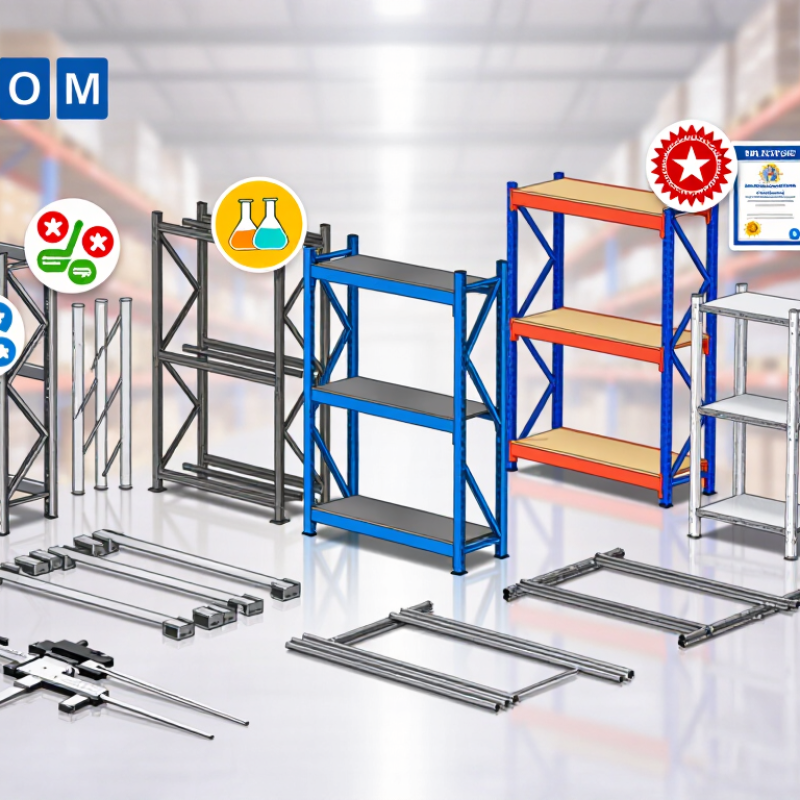
Top 10 Steel Shelving Manufacturers for Global Buyers
Steel shelving demand is rising with e-commerce, spare-parts storage, and urban distribution centers. Global buyers now compare capacity, material quality, and delivery reliability before selecting a manufacturer. Load matters. A typical light-duty shelf may support 80 to 200 kilograms per level, while industrial systems can exceed 500 kilograms. These figures depend on shelf span, steel thickness, reinforcement, and installation quality.
Material selection changes performance. Powder-coated carbon steel suits dry warehouses and retail backrooms, offering a practical balance between cost and corrosion resistance. Galvanized steel performs better in humid areas, loading docks, and semi-open facilities. Stainless steel is useful for food processing or medical environments, but its higher price requires clear sanitation needs. Buyers should request load-test reports, coating thickness, dimensional tolerances, and inspection records. Catalog claims alone are not enough.
Demand differs across regions. Asia remains a major production and consumption center, supported by manufacturing and expanding logistics networks. North America and Europe show steady replacement demand, automation upgrades, and warehouse renovation. Emerging markets often prioritize modular systems that can grow with inventory. Market data is not perfectly comparable; some reports measure shipment value, while others track installed capacity. That gap matters. A credible sourcing review should verify annual output, steel grades, factory equipment, export experience, and after-sales support. In practice, the cheapest quotation can become expensive after freight, missing parts, or uneven assembly instructions.
Regional crude steel production is used as a measurable proxy for the raw-material supply capacity supporting global steel shelving manufacturing. The data covers 2023 production reported by the World Steel Association.
Steel shelving is commonly manufactured from cold-rolled steel, galvanized steel, or coated steel. Asia and Oceania represented the largest regional steel production base in 2023, followed by the European, North American, and CIS markets. Higher regional steel output generally indicates broader access to material supply and manufacturing capacity for storage-system producers.
Source: World Steel Association, World Steel in Figures 2024. Production values are shown in million tonnes of crude steel.
For global buyers comparing the top 10 steel shelving manufacturers, ISO 9001 should be tested, not simply displayed. The ISO Survey 2022 recorded about 1.26 million ISO 9001 certificates worldwide. That figure shows broad adoption, but it does not guarantee strong production control. Ask for the current certificate, issuing body, scope, and audit date. Check whether the scope covers steel forming, welding, coating, and final inspection. Request batch records, calibration logs, and corrective-action reports. Small details matter.
EN 15512 deserves careful interpretation. It applies mainly to adjustable pallet racking, rather than every light-duty shelving unit. A qualified manufacturer should provide design calculations, load tables, material grades, connection details, and stability checks. Compare these documents with the latest standard edition and local installation conditions. Independent testing adds credibility. Look for evidence covering beam deflection, frame behavior, anchoring, and accidental impact. The European Federation of Material Handling identifies EN 15512 as a key structural design reference for adjustable pallet racking. Still, compliance paperwork can be incomplete. I would score each manufacturer against the same checklist, then inspect one production sample. Steel thickness may vary slightly. Coating coverage may also reveal process weaknesses. A polished audit folder is not proof of consistent output.
| No. | Evaluation Dimension | ISO 9001 Verification Requirement | EN 15512 Verification Requirement | Recommended Evidence for Buyers | Suggested Weight | Scoring Guide |
|---|---|---|---|---|---|---|
| 1 | Valid Quality Management System | Confirm a current ISO 9001 certificate issued by an independent, accredited certification body. Check the certificate scope, sites, and expiry date. | ISO 9001 certification alone does not prove compliance with EN 15512. A separate product or engineering assessment is required. | Certificate number, certification body, covered manufacturing site, scope statement, and validity status. | 15% | 0–5 points |
| 2 | Structural Design and Load Capacity | Verify that design controls, engineering reviews, and approval procedures are included within the certified quality system. | Confirm that the rack design considers load capacity, stability, connection behavior, imperfections, and relevant design actions required for adjustable pallet racking. | Stamped calculations, load tables, design assumptions, system drawings, and product configuration limits. | 15% | 0–5 points |
| 3 | Material Traceability | Assess whether incoming steel, purchased components, and production batches are identified and traceable. | Check whether steel grades, thicknesses, mechanical properties, and component specifications correspond with the approved design. | Mill certificates, heat or batch records, incoming inspection reports, and material identification procedures. | 10% | 0–5 points |
| 4 | Manufacturing Process Control | Review documented control of roll forming, punching, welding, coating, assembly, inspection, and nonconforming output. | Confirm that production tolerances and component consistency support the performance assumptions used in the rack design. | Process flow charts, inspection plans, work instructions, calibration records, and corrective-action reports. | 10% | 0–5 points |
| 5 | Testing and Technical Validation | Check whether test methods, test equipment, test results, and approval records are controlled under the quality system. | Look for structural testing or validated engineering evidence relevant to frames, beams, connections, bracing, and stability. | Independent laboratory reports, test procedures, test dates, sample identification, and result acceptance criteria. | 12% | 0–5 points |
| 6 | Connection and Component Performance | Verify that changes to beam connectors, locking devices, frames, and accessories are subject to design and document control. | Evaluate connector capacity, locking reliability, frame-bracing arrangement, and compatibility of all components within the system. | Connection test data, component drawings, installation details, locking-device specifications, and change-control records. | 10% | 0–5 points |
| 7 | Dimensional Accuracy and Interchangeability | Confirm measurement controls, calibrated equipment, inspection frequency, and management of dimensional deviations. | Check whether beam lengths, upright geometry, hole patterns, bracing, and accessories remain within approved design tolerances. | Inspection reports, dimensional tolerance sheets, calibration certificates, and first-article inspection records. | 8% | 0–5 points |
| 8 | Surface Treatment and Corrosion Protection | Review control of coating specifications, surface preparation, curing, thickness measurement, and defect handling. | Confirm that the selected finish is suitable for the intended indoor or environmental conditions and does not alter critical dimensions or performance. | Coating specification, thickness records, adhesion or finish inspections, environmental suitability statement, and batch records. | 7% | 0–5 points |
| 9 | Installation, Use, and Safety Documentation | Verify document-control procedures for manuals, drawings, revisions, warnings, and customer-facing technical information. | Check that installation and operating instructions address rated loads, anchoring, inspection, damage reporting, alterations, and safe use. | Installation manual, load plaques, inspection checklist, anchoring instructions, maintenance guidance, and revision history. | 7% | 0–5 points |
| 10 | After-Sales Quality and Corrective Action | Assess complaint handling, root-cause analysis, corrective action, field feedback, and product recall or notification procedures. | Confirm that field modifications, replacement components, and damage assessments preserve the original structural design assumptions. | Complaint records, response-time data, corrective-action examples, spare-parts controls, and technical support procedures. | 6% | 0–5 points |
Top 10 Steel Shelving Manufacturers Compared by Load Ratings and Product Range
The top ten steel shelving manufacturers serve warehouses, workshops, archives, and retail backrooms. Their main differences appear in load ratings, shelf design, and customization options. Light-duty systems often support 100 to 300 pounds per shelf. Heavy-duty models may exceed 1,000 pounds when loads are evenly distributed. Always verify whether the rating applies to each shelf or the complete unit.
Product range also matters. Strong suppliers usually offer boltless shelving, adjustable racks, mobile units, closed cabinets, and corrosion-resistant finishes. Some provide narrow shelves for boxed records, while others produce deep frames for machinery parts. In real warehouse projects, uprights, beams, decking, and floor conditions affect performance. A published rating is useful, but it is not the whole story. Installation errors can reduce stability quickly.
Tips: Compare tested load ratings, not attractive catalog numbers. Ask for material thickness, safety factors, warranty terms, and installation guidance. Check whether accessories fit across the product range. Measure your heaviest carton first. It sounds basic. It prevents expensive redesigns. I would also request sample drawings before ordering, because a wide product range can still hide limited compatibility. Suppliers with clear technical documents and responsive support are generally easier to trust.
Choosing among the top 10 steel shelving manufacturers requires more than comparing catalog prices. Confirm compliance with ANSI/RMI MH16.1, especially load ratings, frame design, beam connections, and seismic considerations. Request stamped engineering documents, product test records, and installation instructions. ISO 9001 certification can support process consistency, but it does not replace structural verification.
Ask for traceable steel certificates, coating specifications, and independent inspection reports. Useful certifications should match the destination market and project risk. MHI’s 2024 Annual Industry Report found that 83% of respondents expected supply chains to change significantly within five years. Lead times therefore deserve written confirmation. Separate fabrication, inspection, ocean freight, customs, and site delivery dates. A low factory quote can become expensive after delays and rework.
Compare landed pricing, not unit pricing. Include pallets, packaging, duties, spare components, engineering changes, and assembly labor. Request at least three comparable quotations with identical bay dimensions and loading assumptions. Then test the supplier’s answers with a small pilot order.
Real experience matters here. Ask how previous projects handled damaged uprights or missing hardware. Some suppliers answer slowly. That is a warning, though not absolute proof. Published data can guide the shortlist, but buyer judgment remains imperfect. The Logistics Managers’ Index has repeatedly shown that transportation and inventory conditions can shift quickly, making fixed delivery promises less reliable than documented contingency plans.
A reliable steel shelving manufacturer should be judged through a practical selection matrix. Score material quality, customization, logistics, and after-sales support separately. The World Steel Association reported global crude steel production of about 1.89 billion tonnes in 2023. This scale makes traceability essential. Ask for mill certificates, coating specifications, and independent load-test records.
Do not trust glossy brochures.
Customization requires more than changing shelf dimensions. Confirm beam thickness, column spacing, surface treatment, accessories, and installation tolerances. Request a technical drawing before production. The World Bank’s 2023 Logistics Performance Index evaluates customs, infrastructure, shipment quality, and delivery timeliness across 139 economies. Use these factors when comparing factory locations and shipping plans. A low unit price can hide costly delays.
After-sales support should be tested before purchase. Request spare-part lead times, warranty boundaries, inspection procedures, and response contacts. UNCTAD’s Review of Maritime Transport notes that ships carry over 80% of global merchandise trade by volume. Packaging, corrosion protection, and export documentation therefore deserve matrix scores. I would also record communication gaps during sampling. No supplier is perfect. A transparent matrix should show exceptions, not erase them. This makes quality claims easier to verify and future service problems less surprising.