Top 10 Ready Mix Concrete Plant Manufacturers Worldwide

Choosing among the top 10 ready mix concrete plant manufacturers worldwide requires more than comparing prices or production capacity. A reliable plant must turn measured materials into consistent concrete, load after load. Cement silos, aggregate bins, moisture sensors, weigh hoppers, and twin-shaft mixers all influence that result. Delivery speed matters too, especially when trucks face traffic, heat, or long construction distances.

Professor Adam Neville, a respected concrete technology expert, wrote, “Concrete is the most widely used construction material in the world.” His observation explains why plant quality deserves careful attention. A modern ready mix concrete plant should support accurate batching, stable mixing, dust control, equipment maintenance, and traceable quality records. Manufacturers also need to provide practical after-sales service, spare parts, operator training, and software that workers can understand during a busy shift.

This ranking considers those real operating details, not only brochure claims. It reviews plant design, automation, customization, energy use, environmental controls, and international support. Some manufacturers excel at mobile plants, while others perform better with large stationary systems. No ranking is perfect. Data changes. Local service can matter more than global reputation. Buyers should still inspect references, verify calibration procedures, and visit an operating site before making a major investment. A polished control panel cannot repair poor aggregate moisture management. That is an uncomfortable point, but it is important. The best ready mix concrete plant manufacturer is the one that delivers dependable performance after installation, not merely an impressive sales presentation.
Top 10 Ready Mix Concrete Plant Manufacturers Worldwide

Definition and Role of Ready Mix Concrete Plants

Top 10 Ready Mix Concrete Plant Manufacturers Worldwide

Definition and Role of Ready Mix Concrete Plants

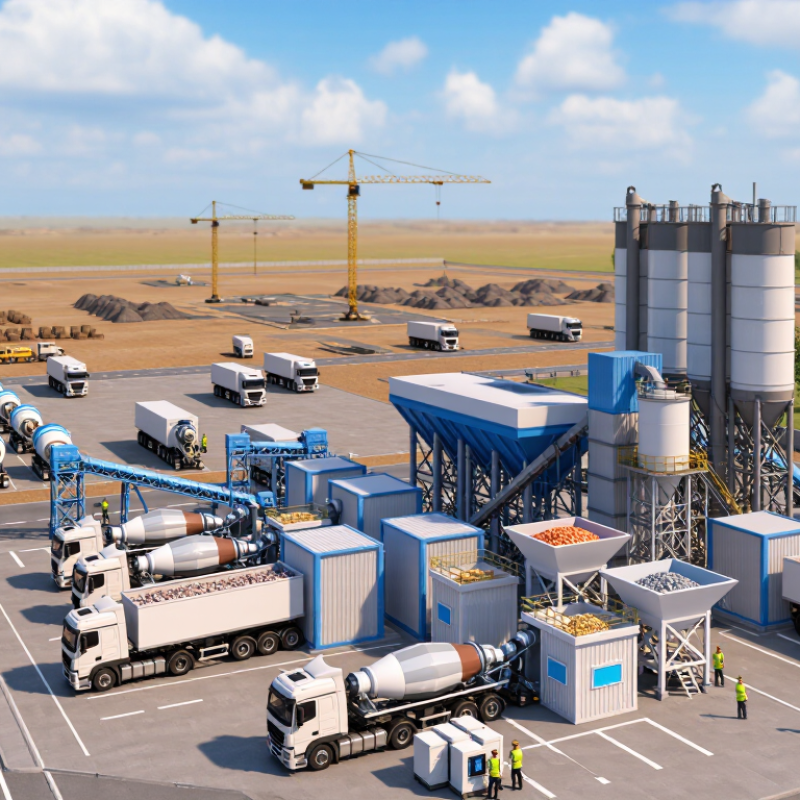
A ready mix concrete plant produces concrete in a controlled, centralized facility. It combines cement, aggregates, water, and admixtures according to a specified mix design. The finished material then travels to construction sites in mixer trucks. Timing matters. Concrete begins losing workability before placement, especially in hot weather or heavy traffic.

The Global Cement and Concrete Association estimates that more than 14 billion cubic meters of concrete are poured worldwide each year. This scale explains the plant’s practical importance. It standardizes batching, improves material tracking, and supports consistent strength across foundations, bridges, and high-rise structures. Automated weigh systems can also reduce dosing errors, although calibration still depends on disciplined maintenance.

The International Energy Agency reported that cement production reached about 4.1 billion tonnes in 2022 and generated nearly 8% of global carbon dioxide emissions. Ready mix plants cannot solve this issue alone. However, accurate batching can limit overdesign, rejected loads, and unnecessary material use. Recycled aggregates and supplementary cementitious materials may reduce impact, but local standards and supply quality remain decisive.

A plant is not merely a mixing machine. It is a coordination point between laboratory testing, logistics, site conditions, and worker experience. A perfect mix on paper can fail in practice. Poor truck scheduling, wet aggregates, or rushed discharge can change performance before concrete reaches the formwork. That weakness deserves more attention.

Top 10 Ready Mix Concrete Plant Manufacturers Worldwide - Definition and Role of Ready Mix Concrete Plants

An anonymized comparison of widely manufactured ready mix concrete plant configurations. The figures below represent typical industry specification ranges rather than company-specific claims.

Rank Manufacturer Profile Typical Plant Type Nominal Output Range Aggregate Storage Mixer Configuration Mobility and Installation Primary Application Key Operational Role Common Control Features
1 Profile 01 Stationary batching plant 60–240 m³/h 4–8 aggregate compartments Twin-shaft or planetary mixer Permanent foundation; high-volume installation Large infrastructure and commercial projects Produces consistent, high-volume concrete near a central production site PLC automation, recipe management, moisture correction, cement and water metering
2 Profile 02 Mobile batching plant 30–120 m³/h 2–4 aggregate compartments Planetary or twin-shaft mixer Trailer-mounted or modular; rapid relocation Roadwork, bridges and short-to-medium-term projects Moves production close to changing construction work fronts Digital weighing, automated batching, remote diagnostics and electronic data logging
3 Profile 03 Compact batching plant 15–60 m³/h 2–4 aggregate compartments Pan or planetary mixer Small footprint; simplified civil works Urban construction and restricted sites Provides controlled concrete production where space and access are limited Integrated control cabinet, automated weighing and compact conveyor systems
4 Profile 04 Dry-batch plant 30–180 m³/h 4–8 aggregate bins No central mixer; truck mixer completes mixing Fixed or semi-mobile configuration Ready mix distribution with short delivery distances Measures and dispenses ingredients efficiently before final mixing in transit Aggregate, cement, water and admixture weighing with truck-dispatch integration
5 Profile 05 Wet-batch plant 30–150 m³/h 3–6 aggregate compartments Central twin-shaft or planetary mixer Usually stationary; requires mixer and maintenance platform Projects requiring strict mix uniformity Completes controlled mixing before concrete is discharged into transport vehicles Timed mixing cycles, batch traceability, moisture compensation and automatic recipes
6 Profile 06 High-efficiency modular plant 90–240 m³/h 6–10 aggregate compartments Twin-shaft mixer with high-throughput discharge Bolted modules; scalable layout Continuous supply for major civil engineering works Supports high daily production while allowing equipment expansion Centralized SCADA, automated loading, silo-level monitoring and production reports
7 Profile 07 Containerized batching plant 25–100 m³/h 2–5 aggregate compartments Compact planetary or pan mixer Containerized modules; simplified shipping and assembly Remote, temporary and export construction sites Reduces transport and installation complexity for geographically dispersed projects Remote monitoring, automatic calibration, recipe storage and containerized controls
8 Profile 08 High-recycled-content batching plant 30–120 m³/h 3–7 compartments, including recycled aggregate storage Twin-shaft or planetary mixer Fixed or modular installation Lower-impact concrete and demolition-material reuse Separates and meters virgin and recycled materials for controlled mix production Multiple material feeders, moisture sensors, dust control and batch documentation
9 Profile 09 Precast-oriented batching plant 20–100 m³/h 3–6 aggregate compartments Planetary mixer for uniform, low-slump mixes Stationary, factory-integrated layout Precast elements, paving products and concrete components Delivers repeatable batches for molds, casting lines and automated production cells High-accuracy weighing, moisture control, recipe locking and production traceability
10 Profile 10 Small-batch and on-demand plant 10–45 m³/h 2–4 aggregate compartments Pan, planetary or compact twin-shaft mixer Compact stationary or towable setup Small contractors, repair work and local concrete supply Produces precise quantities with reduced material waste and lower initial site requirements Manual-assisted or semi-automatic controls, digital scales and simple dispatch records
Definition and role: A ready mix concrete plant is an industrial facility that proportionally stores, weighs, mixes and dispatches cement, aggregates, water and chemical admixtures to produce concrete with a specified composition. Its core role is to improve batching accuracy, mix uniformity, production efficiency, quality control and delivery coordination for construction projects.

Key Criteria for Comparing Global Manufacturers

Comparing global ready mix concrete plant manufacturers requires more than reading capacity figures. A plant rated at 120 cubic meters per hour may perform differently under local humidity, aggregate quality, and traffic conditions. Examine mixer design, weighing accuracy, conveyor durability, and control system response. Ask for test records, not only promotional claims. Numbers can mislead.

Experienced buyers should inspect comparable installations and speak with operators. A short visit can reveal material buildup, difficult access points, or frequent sensor failures. Check whether the manufacturer provides commissioning, operator training, remote diagnostics, and nearby spare parts. Response time matters when a failed bearing stops several concrete trucks. Reliable suppliers also explain maintenance intervals in practical terms.

Compliance and adaptability deserve equal attention. Compare documentation for electrical safety, emissions control, noise limits, and local construction standards. Review the plant’s ability to handle different mix designs, recycled aggregates, and future production changes. Energy consumption per cubic meter offers a clearer comparison than motor size alone. Consider total ownership cost, including installation, software updates, service travel, and downtime. A cheaper quotation may hide expensive maintenance. No scorecard is perfect. Weight each criterion according to climate, project scale, workforce skills, and delivery distance. Even careful evaluations can miss problems that appear only after a rainy season or a demanding production schedule.

How to Compare Global Ready-Mix Concrete Plant Manufacturers

The chart presents a practical procurement-weighting model for evaluating manufacturers without ranking or revealing individual company data. Output capacity, batching accuracy, automation, energy efficiency, environmental compliance, service support, flexibility, safety, footprint, and lifecycle cost are commonly reviewed when selecting a ready-mix concrete plant. Actual plant performance should be verified against project requirements, local regulations, and independent technical documentation.

Reference framework: ISO 9001 quality management, ISO 14001 environmental management, ISO 45001 occupational health and safety, EN 206, and ASTM C94/C94M.

Profiles of the Top 10 Ready Mix Concrete Plant Manufacturers

Profiles of the Top 10 Ready Mix Concrete Plant Manufacturers

The top ten ready mix concrete plant manufacturers reflect different strengths, not identical business models. Several specialize in high-output stationary plants for megaprojects. Others focus on mobile units for highways, remote sites, and short-term contracts. Their profiles usually compare batching accuracy, production capacity, mixer design, automation, spare-parts support, and installation experience. Industry reports from MarketsandMarkets project continued growth in the global ready mix concrete market, supported by urban construction and infrastructure investment. However, market estimates differ by methodology. That limitation deserves attention.

Leading manufacturers increasingly provide moisture sensors, cloud-based production records, recycled-water systems, and automatic cement weighing. These features can reduce rejected batches and improve traceability. Some suppliers report plant capacities above 120 cubic meters per hour, while compact models may produce less than 60. Actual output depends on aggregate moisture, truck cycles, mix design, and operator skill. Certification under ISO 9001 can strengthen quality systems, but certification alone cannot guarantee consistent concrete. Site testing still matters.

Tips: Compare verified output, not brochure capacity. Request references from similar climates. Inspect calibration records and emergency maintenance procedures. Ask whether software exports batch data in an accessible format. A cheaper plant may become expensive when silos, foundations, transport, and training are excluded. I would also review local standards, dust-control requirements, and water recycling performance before selecting a manufacturer. Some rankings remain imperfect because private companies disclose limited production and revenue data.

Technologies, Production Capacity, and Global Market Reach

Top 10 Ready Mix Concrete Plant Manufacturers Worldwide

The leading ready-mix concrete plant manufacturers compete through automation, output, and service reach. Digital batching systems now connect moisture sensors, truck scales, and dispatch software. These tools reduce mix variation and shorten loading time. A typical large plant can produce 120 to 240 cubic metres per hour, although published capacity often reflects ideal conditions. Real sites rarely match that figure.

Low-carbon production is reshaping equipment design. Plants increasingly support supplementary cementitious materials, recycled water, and accurate aggregate dosing. The International Energy Agency reports that cement production creates about 7% of global energy-related and process CO2 emissions. This pressure encourages manufacturers to improve dosing precision and reduce cement waste. Small improvements matter.

Scale remains important. The Global Cement and Concrete Association estimates that roughly 14 billion cubic metres of concrete are used globally each year. Major suppliers therefore build modular plants near growing cities, ports, and infrastructure corridors. Fleet tracking, predictive maintenance, and remote diagnostics extend support across borders. However, global market reach is not only about shipping equipment. Local technicians, spare-parts storage, electrical compatibility, and compliance with regional standards can decide project success. Capacity comparisons also need caution. Some reports measure theoretical hourly output, while others measure annual production. That difference can distort rankings.

How to Select the Right Ready Mix Concrete Plant Manufacturer

Choosing the right ready mix concrete plant manufacturer requires more than comparing equipment prices. Production reliability matters because the Global Cement and Concrete Association reports that around 14 billion cubic metres of concrete are used globally each year. A plant must maintain accurate batching, stable moisture control, and consistent delivery during peak demand.

Review the manufacturer’s engineering record, not only its brochure. Ask for verified case studies, production capacities, maintenance data, and commissioning timelines. Check whether the design supports local standards, such as ASTM C94 or EN 206. Energy use also deserves attention. The GCCA’s Concrete Future Roadmap identifies concrete production as responsible for approximately 7% of global carbon dioxide emissions. Efficient motors, dust control, recycled water systems, and low-waste layouts can reduce long-term operating costs. These details are easy to overlook.

Tips: Request a factory acceptance test before shipment. Confirm spare-part availability and remote technical support. Visit a working plant, if possible. Listen for unusual mixer vibration. Inspect aggregate bins, weigh hoppers, and access platforms. The cheapest quotation may become expensive after repeated stoppages. No checklist is perfect. I would still leave room for local weather, road access, operator skill, and future expansion. A manufacturer that explains limitations clearly may be more dependable than one promising everything. Ask how quickly calibration problems are diagnosed, and require measurable service commitments in the contract.