2026 How to Ensure Timely Readymix Concrete Delivery?
In the construction industry, ensuring timely readymix concrete delivery is crucial. Delays can lead to increased costs and project setbacks. Proper planning and communication are essential. A construction schedule must consider concrete curing times and site access.
Understanding the specific needs of each project is key. Factors like quantity, mix design, and delivery windows must be clarified. Poor coordination can result in shortages or excesses. If a project demands 100 cubic meters of concrete, it's important to order the right amount on time.
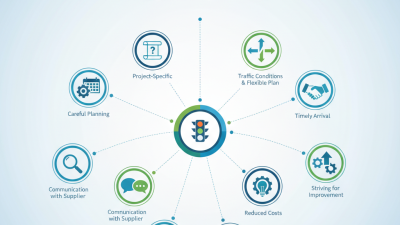
Furthermore, a reliable supplier can make a difference. It’s important to choose companies with good reputations. Sometimes, even the best-laid plans can go wrong, reminding contractors to stay flexible. Factors like traffic and weather can impact delivery. By anticipating challenges, project managers can minimize disruptions.
Key Factors Influencing Timely Readymix Concrete Delivery in 2026
Timely delivery of readymix concrete is crucial in construction projects. Several key factors can influence this timeline. One of the most important is the scheduling of deliveries. Accurate scheduling requires clear communication between all parties. Delays in one area can have a ripple effect on the entire project.
Another factor is the distance between the batching plant and the construction site. Longer distances often lead to delays due to traffic and other unforeseen issues. Regular checks on the traffic conditions can help. Additionally, the capacity of the batching plant plays a critical role. If the plant is overloaded, it may struggle to meet demand, causing unexpected delays.
Finally, weather conditions cannot be ignored. Extreme heat or rain can slow down production. Adjustments to the delivery schedule might be necessary in such cases. Planning for possible disruptions is essential but often overlooked. Reflection on these challenges can lead to improved strategies in the future.
2026 How to Ensure Timely Readymix Concrete Delivery? - Key Factors Influencing Timely Readymix Concrete Delivery in 2026
| Key Factor |
Description |
Impact Level (1-5) |
Mitigation Strategies |
| Traffic Conditions |
Unexpected road conditions and congestion can delay deliveries. |
4 |
Use real-time traffic apps, plan alternative routes. |
| Order Quantity |
Large orders may require multiple trips, affecting timelines. |
3 |
Schedule deliveries in phases, optimize batch sizes. |
| Weather Conditions |
Adverse weather can halt construction activities and delivery. |
5 |
Monitor forecasts, establish backup plans for delays. |
| Site Accessibility |
Difficult or restricted access can prevent timely delivery. |
4 |
Assess site conditions ahead of time, coordinate with site managers. |
| Equipment Breakdown |
Breakdowns can lead to delays in concrete preparation and delivery. |
4 |
Regular maintenance of equipment, having backup machinery available. |
Optimizing Logistics and Transportation for Efficient Concrete Delivery
Efficient logistics and transportation play a critical role in the timely delivery of readymix concrete. Recent industry studies indicate that nearly 30% of delays in construction projects stem from late concrete deliveries. Streamlining logistics can significantly reduce these delays. Real-time tracking systems are essential for monitoring delivery schedules. They allow firms to identify potential roadblocks and mitigate risks before they escalate.
However, many companies underestimate the importance of route optimization. A report from the American Society of Concrete Contractors highlights that improper routing can increase delivery times by up to 20%. By utilizing advanced software for logistics planning, businesses can analyze traffic patterns and weather conditions, ensuring smoother operations. Despite the availability of these tools, a significant number of companies still rely on outdated methods.
On the transportation front, maintaining a consistent fleet is vital. Data shows that vehicle maintenance can reduce breakdown incidence by over 15%. Yet, many operators disregard regular inspections. It leaves them vulnerable to unexpected issues. Investing in training drivers on best practices also enhances safety and efficiency on the road. While some companies implement these recommendations, ongoing challenges remind us that continuous improvement is necessary for success in the concrete supply chain.
Technological Innovations in Concrete Delivery and Scheduling Systems
Technological innovations play a crucial role in ensuring timely readymix concrete delivery. Advanced scheduling systems now utilize real-time data analytics. These systems help in managing logistics effectively. A recent study by McKinsey found that digital technologies could reduce delays by up to 30%. Concrete companies that adopt these solutions often see improved efficiency.
Innovative tools such as GPS tracking and automated dispatch systems are becoming standard. These technologies allow operators to monitor delivery trucks in real time. With this ability, they can adapt routes quickly to avoid delays. However, not all companies embrace these changes. Some still rely on outdated practices that can lead to bottlenecks. Research shows that 40% of projects experience schedule overruns due to poor logistics.
Collaboration software also enhances communication among teams. It allows for better coordination between suppliers, drivers, and construction sites. Yet, challenges remain in data integration. Accurate forecasting can be difficult without historical data. This highlights the need for continuous improvement in data utilization across the industry.
2026 Readymix Concrete Delivery Efficiency
This chart illustrates the monthly delivery efficiency of readymix concrete in 2026. The delivery efficiency has shown an upward trend, peaking at 97% during July. Technological innovations and better scheduling systems have contributed to this improvement.
Measuring Impact: The Role of Weather and Traffic Analytics on Delivery
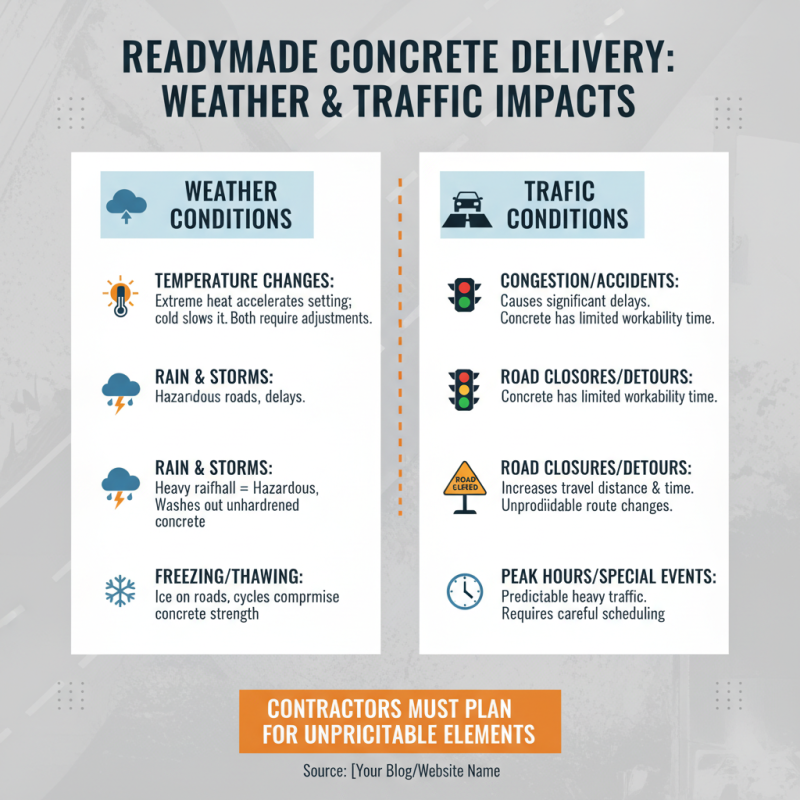
Weather and traffic conditions significantly impact the delivery of readymix concrete. Temperature changes, rain, and storms can delay shipments. For instance, heavy rainfall can make roads hazardous, causing unsafe driving conditions. When planning deliveries, contractors must account for these unpredictable elements.
Additionally, traffic analytics play a crucial role. Understanding peak traffic hours can help in scheduling deliveries effectively. Real-time traffic data can inform faster route adjustments. However, relying solely on this data can be limiting. Unexpected roadworks or accidents may still occur, causing delays.
Reflections on these challenges are vital. It is essential for companies to develop contingency plans. Investing in weather forecasting tools can help predict storms or extreme temperatures. Furthermore, fostering strong communication with drivers can ensure they are updated about traffic changes. Balancing all these aspects can streamline operations and enhance delivery reliability.
Best Practices for Communication Between Suppliers and Contractors
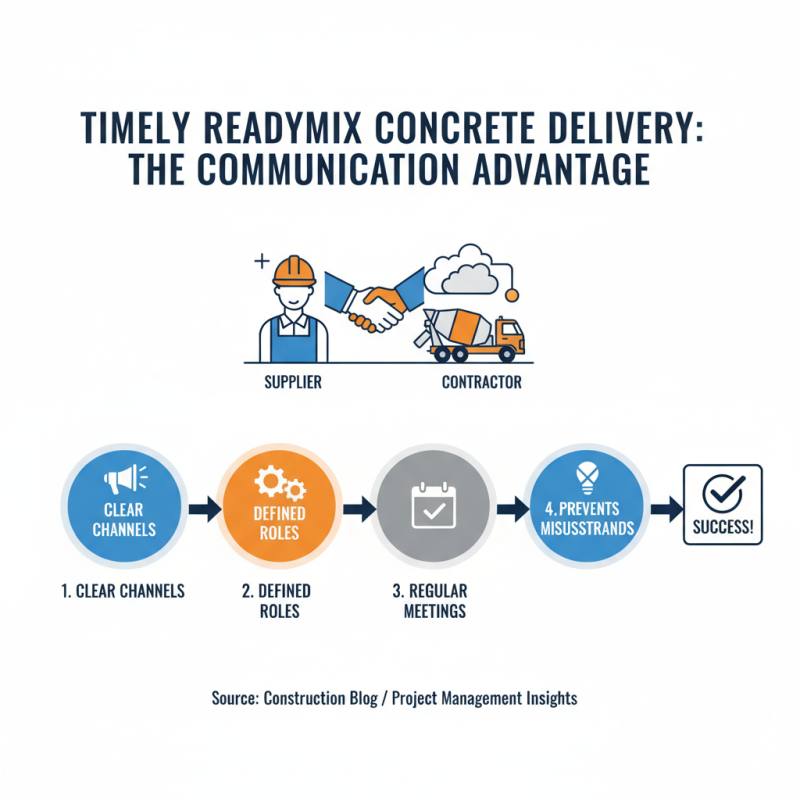
Effective communication between suppliers and contractors is crucial for timely readymix concrete delivery. It is essential to establish clear channels of communication from the beginning. Both parties must understand their roles and responsibilities. Setting regular meetings to discuss project progress can help maintain alignment. Some may think this is unnecessary, but it actually prevents misunderstandings.
Another important aspect is using a reliable platform for updates. A shared digital tool can keep everyone informed about schedules and changes. However, not all team members may be familiar with technology, leading to potential gaps in information. Thus, training sessions should be considered to ensure everyone is on the same page.
Listening plays a key role in maintaining effective communication. Suppliers must understand the contractors' needs and timelines. Contractors, in turn, must feel free to voice any concerns about delays. Misjudgments can occur when assumptions take the place of clear dialogue. Building a culture of open communication takes time but can significantly improve project outcomes.