How to Choose the Right Ready Mix Concrete Truck for Your Project?
Choosing the right ready mix concrete truck for your project is crucial. It can impact your timeline and budget. John Smith, a leading expert in the concrete industry, says, "Selecting the right truck can make or break a project."
A ready mix concrete truck brings efficiency and precision. These trucks mix concrete on-site, ensuring fresh quality. However, not all trucks are the same. Size, capacity, and technology can vary significantly. Understanding your project's unique needs is essential.
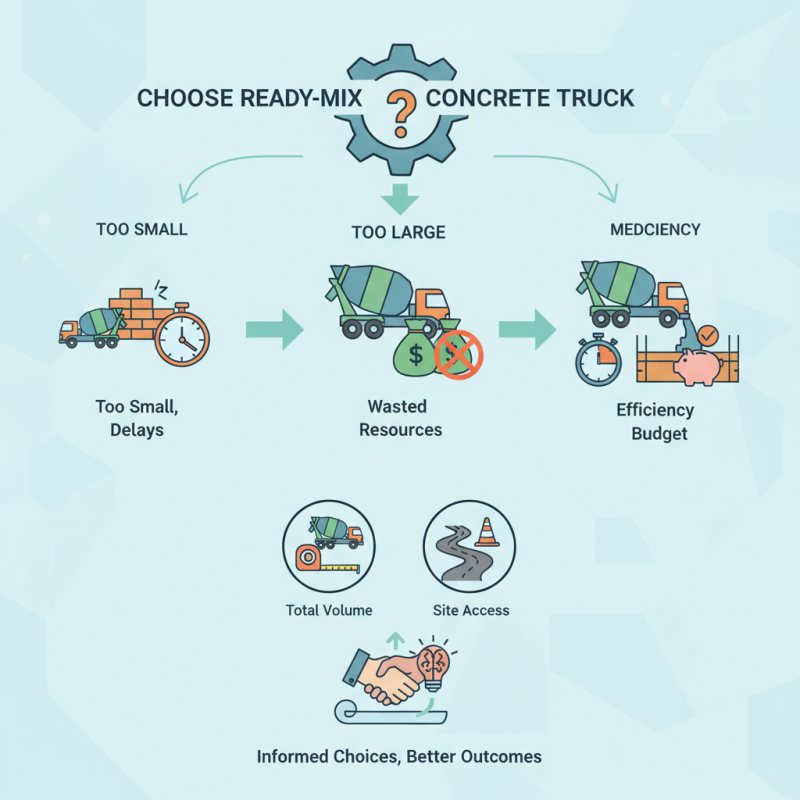
Sometimes, mistakes happen. A too-small truck can lead to delays. Conversely, an oversized truck may waste resources. Clearly define the total volume of concrete needed. Consider the work site access as well. Ultimately, making informed choices will lead to better outcomes.
Factors to Consider When Selecting a Ready Mix Concrete Truck
Choosing the right ready mix concrete truck ensures the success of your project. Several factors affect this decision. Understanding your project’s scale is crucial. For small projects, a smaller truck may suffice. Larger projects typically require larger trucks.
Capacity is a primary consideration. Ready mix trucks can range from 6 to 12 cubic yards. A report by the National Ready Mixed Concrete Association (NRMCA) indicates that most residential jobs use 6-8 cubic yards. Misjudging capacity can lead to delays. If you order too little, you risk running out midway, affecting the project timeline.
It’s also important to consider the distance from the plant to the site. Every minute counts in transporting concrete. Delays can lead to temperature changes in the mix, causing issues with hardening.
**Tip:** Always have a backup plan for transportation. This could save you time and money.
Weather conditions are another factor. Hot weather can cause rapid curing. Cold conditions can lead to freezing, affecting quality. Understanding your local climate helps in selecting the right mix.
**Tip:** Monitor weather forecasts during your project. Adjust schedules to ensure the best conditions for pouring concrete.
Choosing the right truck goes beyond capacity and distance. It requires a holistic approach that considers various factors. Doing so can minimize mistakes and improve outcomes.
Choosing the Right Ready Mix Concrete Truck
Types of Ready Mix Concrete Trucks Available in the Market
When selecting a ready mix concrete truck, understanding the types available is crucial. There are several types to consider, each designed for specific project needs. For example, standard concrete mixer trucks are common for most construction sites. They mix concrete on the way to the site, ensuring freshness.
Another option is the volumetric concrete mixer. This type allows for on-site mixing and can adjust the concrete ratio to fit specific requirements. It offers flexibility but may require skilled operators. Then, there are truck-mounted boom pumps, which are useful for hard-to-reach locations. They allow for precise concrete placement.
**Tips:** Always assess your project size. Larger projects may benefit from a volumetric mixer. Do not ignore site access; it affects delivery. Check the truck’s capacity; too small may delay your work. Each type has its pros and cons, so it’s wise to consider them carefully before making a choice.
How to Choose the Right Ready Mix Concrete Truck for Your Project?
| Truck Type |
Capacity (Cubic Yards) |
Typical Uses |
Advantages |
Disadvantages |
| Standard Mixer Truck |
8 - 12 |
General construction, pavements |
Versatile and widely available |
Limited to larger projects |
| Mini Mixer Truck |
2 - 4 |
Small jobs, residential construction |
Ideal for tight spaces |
Limited capacity |
| Volumetric Mixer Truck |
Variable |
Customized mixes on-site |
Flexibility in mix design |
Requires skilled operator |
| Truck Mixer with Pump |
8 - 10 |
High-rise buildings, large pours |
Efficient for vertical pours |
More complex operation |
Assessing the Capacity and Volume Needs for Your Project
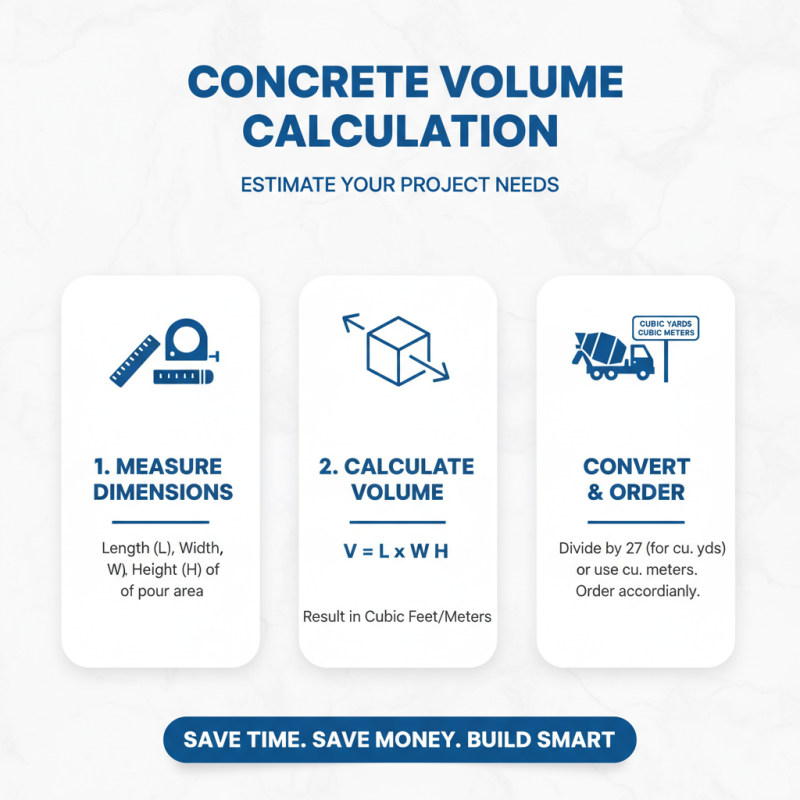
When assessing the capacity and volume needs for your project, it’s essential to understand your specific requirements. Calculating the total volume of concrete needed is the first step. Consider the dimensions of your project area. Measure the length, width, and height of the pour. Use these measurements to estimate the cubic yards or cubic meters of concrete required. This straightforward calculation is critical to avoid running short or overestimating.
The right ready-mix concrete truck matches your project’s volume. Trucks come in various sizes, typically ranging from 6 to 12 cubic yards. If your project is small, like a patio or walkway, a smaller truck may suffice. Larger projects, such as foundations or commercial buildings, require bigger trucks. It's easy to miscalculate, especially with tricky designs. Over- or undersized trucks lead to delays or wasted materials. Evaluate your project size carefully, even if it seems simple. Each detail matters.
Understanding the Delivery Mechanisms and Features of Trucks
When selecting a ready mix concrete truck, understanding its delivery mechanisms is crucial. Various trucks come with different features that can significantly affect your project’s efficiency. For instance, some trucks have traditional chutes, while others feature conveyors for precise placement. Assess how these features align with your project needs to avoid complications.
Tips: Always consider the truck’s mixing capacity. Is it sufficient for your project scale? Trucks that are too small might delay your schedule. Gauge your site’s accessibility, as tight spaces can limit truck maneuverability. This will impact the delivery time and quality of work.
Additionally, some trucks offer hydraulic systems for better control over the concrete flow. This feature is valuable for projects with intricate designs. However, trucks with advanced features may require more operator training. This can lead to mistakes if not addressed properly.
Tips: Don’t overlook the importance of driver experience. A skilled driver can make a significant difference in efficiency. Regular maintenance checks are also vital. A well-maintained truck will perform better under various site conditions.
Evaluating Cost and Budget Constraints for Ready Mix Concrete Trucks
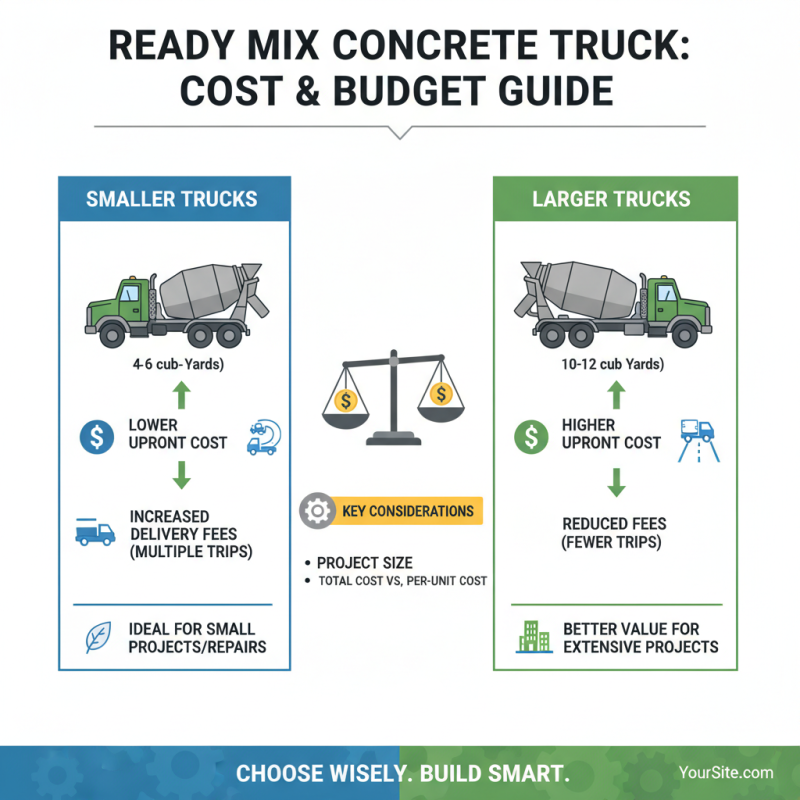
Choosing the right ready mix concrete truck involves careful consideration of cost and budget constraints. Prices vary greatly depending on size and capacity. Smaller trucks may have lower upfront costs but can increase delivery fees if multiple trips are needed. Larger trucks often offer better value for extensive projects.
Evaluate your project's specific needs. A big scale project requires more concrete, justifying the investment in a larger truck. However, if your project is smaller, a mid-size truck may suffice. This could save costs and reduce waste. Balancing truck capacity with project size is crucial.
Don’t forget about additional expenses. Think about delivery fees, hourly rates, and potential waiting times. These can add up quickly, impacting your budget. Reflect on potential overruns in timing or quantity that could stretch financial limits. Planning for these unexpected expenses is essential in your decision-making process.